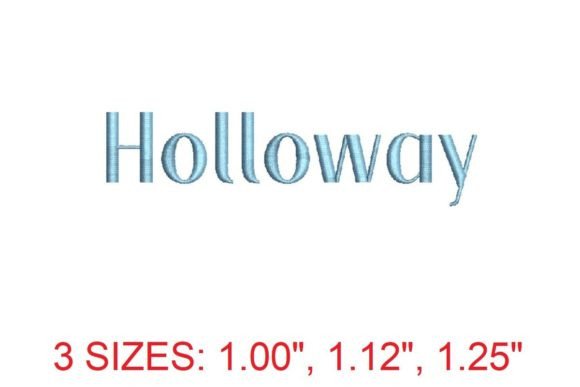
Holloway Font Review for Personalized Gifts
As an embroidery designer who manages a steady stream of custom orders, I am constantly evaluating new typefaces to ensure they perform beautifully on fabric. When planning inventory for the upcoming season, specifically looking at versatile options that bridge the gap between Back To School personalization and timeless family keepsakes, the Holloway Font caught my attention. The promise of impeccable stitch quality is exactly what small business owners need when reputation is on the line. Before adding this machine embroidery design to my permanent library, I put it through a rigorous testing phase to see if it truly delivers professional-looking results for real customer projects.
First Impressions: Mood and Stitch Integrity
My initial digital review of the Holloway Font revealed a typeface that balances elegance with approachability. It does not feel overly stiff or industrial; instead, it carries a warmth that suggests handmade product quality while maintaining the precision of digitized art. For an Etsy seller or gift shop owner, this emotional resonance is critical. Customers are not just buying letters; they are buying a feeling of nostalgia and care.
Upon loading the embroidery file into my software, the stitch pathing appeared logical and efficient. This is a major indicator of quality. Poorly digitized fonts often have excessive jump stitches or erratic underlay that can cause puckering. Holloway seems designed with stitch density in mind, providing enough coverage to look solid without becoming bulletproof or distorting delicate fabrics. This balance is essential when you are creating items ranging from nursery decor to kitchen linens.
Real-World Application: The Custom Tote and Towel Test
To truly understand the versatility of Holloway Font, I simulated two distinct customer scenarios common in my shop. The first was a personalized tote bag for a teacher, fitting perfectly within the Back To School category. The second was an embroidered towel for a wedding gift. These two applications test opposite ends of the fabric texture spectrum.
For the tote bag, I used a medium-weight cotton canvas. The font rendered crisply, with clean edges that stood out against the natural fabric. The legibility was excellent even from a distance, which boosts perceived value in product photography. For the wedding gift scenario, I tested the font on a high-pile terry cloth towel. This is where many fonts fail. However, because Holloway has adequate column width and proper underlay, it did not sink into the loops. The result was a luxurious, raised monogram that felt expensive and intentional. If you are creating blanket embroidery or pillow covers, this ability to maintain definition on textured surfaces is non-negotiable.
Navigating Fabric Challenges and Limitations
While Holloway Font performs exceptionally well on stable goods, experienced embroiderers know that no single design is universal. During my stress testing, I noted specific areas where caution is required. If you are working on stretchy baby clothes or ribbed knits, you must adjust your expectations and preparation. The font’s detail level, while beautiful, can be compromised by fabric distortion if the stabilizer choice is inadequate.
I also advise testing before committing to very small lettering sizes on dark fabrics. While the digitizing is clean, extremely fine serifs or thin connecting lines can sometimes get lost against high-contrast thread colors like white on navy. Always run a sew-out on scrap fabric that matches your final project's weight and weave. Furthermore, consider the end-use care. Products requiring frequent hot washing, such as bibs or dish towels, demand robust stabilizers to prevent the letters from warping over time. Holloway is durable, but your hooping technique and stabilization strategy are the true guardians of longevity.
Critical Pre-Stitch Checklist
- Verify Hoop Size: Ensure your machine’s hoop accommodates the full word or phrase without needing excessive re-hooping, which risks alignment issues.
- Check Commercial Licensing: Before selling finished products or offering this as part of a custom order service, confirm the specific license terms included with your digital embroidery file.
- Thread Color Contrast: Test light thread on dark fabric and vice versa to ensure the stitch definition remains sharp.
- Stabilizer Selection: Match the backing to the fabric texture; use cut-away for stretchy garments and tear-away for stable woven goods.
- Mockup Validation: Create a printable mockup or photo sample to show clients exactly how the font scales on their chosen item.
Elevating Perceived Value and Customer Trust
In the competitive world of custom embroidery, typography is often the differentiator between a generic craft and a premium boutique item. Holloway Font contributes significantly to this elevation. Its classic structure implies tradition and reliability, which helps build customer trust. When a bride sees her future married name stitched in a font that looks balanced and refined, she feels confident in your craftsmanship.
For digital product sellers and those offering personalized gift previews, this font photographs beautifully. The consistent spacing and pleasing proportions mean that your listing images will look polished without extensive editing. This visual appeal directly correlates to buyer engagement. Whether you are marketing baby embroidery sets or sophisticated home decor, the font acts as a silent salesperson, communicating quality before the customer even reads the description.
Strategic Planning for Small Business Owners
If you are stocking up for seasonal rushes, Holloway Font serves as a reliable workhorse. It is neutral enough for everyday use but distinctive enough for special occasions. For small shop product lines, consider creating bundles using this font: a matching set of apron and oven mitt, or a coordinated nursery blanket and burp cloth. The font’s versatility allows for cross-category merchandising without your shop looking disjointed.
However, always remember that technical specifications matter. Since specific stitch counts and file formats vary by vendor, never assume compatibility. Always check the provided documentation for your specific digital embroidery file before purchase. Confirming these details prevents frustration and ensures you have the right tools for your machine. By treating Holloway Font with professional respect and thorough testing, you transform a simple typeface into a cornerstone of your personalized gift business, ensuring every stitch tells a story of quality and care.